ChanRobles Virtual law Library
|
|
|
CROATIA
Constitutional Law Republic of Croatia The millennial identity of the Croatian nation and the continuity of its statehood, confirmed by the course of its entire historical experience in different statal forms and by the perpetuation and growth of the idea of a national state, based on the Croatian nation's historical right to full sovereignty, manifested itself:chanroblesvirtuallawlibrary
- in the independent mediaeval state of Croatia founded in the ninth century; - in the Kingdom of Croats established in the tenth century; - in the preservation of the identity of the Croatian state in the Croatian-Hungarian personal union; - in the autonomous and sovereign decision of the Croatian Sabor [Parliament] of 1527 to elect a king from the Hapsburg dynasty; - in the autonomous and sovereign decision of the Croatian Sabor to sign the Pragmatic Sanction of 1712; - in the conclusions of the Croatian Sabor of 1848 regarding the restoration of the integrity of the Triune Kingdom of Croatia under the power of the Ban, on the basis of the historical statal and natural right of the Croatian nation; - in the Croato-Hungarian Settlement Agreement of 1868 regulating the relations between the Kingdom of Dalmatia, Croatia and Slavonia and the Kingdom of Hungary, on the basis of the legal traditions of both states and the Pragmatic Sanction of 1712; - in the decision of the Croatian Sabor of 29 October 1918 to dissolve state relations between Croatia and Austria-Hungary and the simultaneous affiliation of independent Croatia, invoking its historical and natural right as a nation, with the State of Slovenes, Croats and Serbs, proclaimed on the theretofore territory of the Hapsburg Monarchy; - in the fact that the Croatian Sabor never sanctioned the decision of the National Council of the State of Slovenes, Croats and Serbs to unite with Serbia and Montenegro in the Kingdom of Serbs, Croats and Slovenes [1 December 1918], subsequently [3 October 1929] proclaimed the Kingdom of Yugoslavia; - in the establishment of the Banovina of Croatia in 1939, by which Croatian state identity was restored in the Kingdom of Yugoslavia; - in laying the foundations of state sovereignty during the Second World War, through decisions of the Antifascist Council of National Liberation of Croatia [1943], as counter to the proclamation of the Independent State of Croatia [1941], and subsequently in the Constitution of the People's Republic of Croatia [1947] and several later constitutions of the Socialist Republic of Croatia [1963-1990]. At the historic turning point marked by the rejection of the communist system and changes in the international order in Europe, the Croatian nation by its freely expressed will in the first democratic elections [1990] - reaffirmed its millennial statehood and resolution to establish the Republic of Croatia as a sovereign state.chanrobles virtualawlibrary Proceeding from the above-presented
historical facts and from the generally accepted principles in the
modern
world and the inalienability and indivisibility, nontransferability and
nonconsumability of the right of the Croatian nation to
self-determination
and state sovereignty, including the inalienable right to secession and
association as the basic precondition for peace and stability of the
international
order, the Republic of Croatia is hereby established as the national
state
of the Croatian nation and the state of members of other nations and
minorities
who are its citizens: Serbs, Moslems, Slovenes, Czechs, Slovaks,
Italians,
Hungarians, Jews and others, who are guranteed equality with citizens
of
Croatian nationality and the realization of ethnic rights in accordance
with the democratic norms and standards of the United Nations
Organization
and the free world countries. Respecting the will of the Croatian
nation
and all citizens, resolutely expressed in free elections, the Republic
of Croatia is hereby formed and shall develop as a sovereign and
democratic
state in which the equality and freedoms and rights of man and citizen
shall be guaranteed and ensured, and their economic and cultural
progress
and social welfare promoted. The Republic of Croatia is a unitary and indivisible democratic and social state. Power in the Republic of Croatia derives from the people and belongs to the people as a community of free and equal citizens. The people shall exercise this power through the election of representatives and through direct decision-making.cralaw:red. The sovereignty of the Republic of Croatia is inalienable, indivisible and untransferable.chanrobles virtualawlibrary The sovereignty of the Republic of Croatia extends over its land area, rivers, lakes, canals, internal maritime waters, territorial sea, and the air space above these. In accordance with international law, the Republic of Croatia shall exercise its sovereign rights and jurisdiction in the maritime areas and the seabed and subsoil thereof of the Adriatic Sea outside the state territory up to the borders with its neighbours. The Croatian Sabor and people shall directly, independently and in accordance with the Constitution and law, decide:chanroblesvirtuallawlibrary
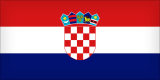
- on the preservation of natural and cultural wealth and its utilization; - on association in alliances with other states. The Republic of Croatia may conclude alliances with other states, retaining the sovereign right to decide by itself on the powers to be transferred and the right freely to withdraw from such associations.cralaw:red. Freedom, equal rights, national equality, love of peace, social justice, respect for human rights, inviolability of ownership, conservation of nature and the human environment, the rule of law, and a democratic multiparty system are the highest values of the constitutional order of the Republic of Croatia.cralaw:red. In the Republic of Croatia government shall be organized on the principle of the separation of powers into the legislative, executive and judicial branches.cralaw:red. In the Republic of Croatia laws shall conform with the Constitution, other rules and regulations shall conform with the Constitution and law.chanrobles virtualawlibrary Everyone shall abide by the Constitution and law and respect the legal order of the Republic. Formation of political parties shall be free. Political parties shall be formed according to the territorial principle.chanrobles virtualawlibrary The work of any political party which by its programme or activity violently endangers the democratic constitutional order, independence, unity or territorial integrity of the Republic of Croatia shall be prohibited. The armed forces of the Republic of Croatia shall protect its sovereignty and independence and defend its territorial integrity.chanrobles virtualawlibrary The defence system of the Republic of Croatia shall be regulated by law. The borders of the Republic of Croatia may only be altered by a decision of the Croatian Sabor.cralaw:red. Croatian citizenship, its acquisition and termination shall be regulated by law.chanrobles virtualawlibrary No citizen of the Republic of Croatia shall be exiled from the Republic or be deprived of citizenship, and may not be extradited to another state. The Republic of Croatia shall protect the rights and interests of its citizens living or staying abroad, and shall promote their links with the homeland.chanrobles virtualawlibrary Parts of the Croatian nation in other states shall be guaranteed special concern and protection by the Republic of Croatia. The coat-of-arms of the Republic of Croatia is the historical Croatian coat-of-arms whose base consists of 25 alternating red and white (argent) fields.chanrobles virtualawlibrary The flag of the Republic of Croatia consists of three colours: red, white and blue, with the historical Croatian coat-of-arms in the centre. The anthem of the Republic of Croatia is "Lijepa naöa domovino". The description of the historical Croatian coat-of-arms and flag, the text of the anthem, and the use of these and other state symbols shall be regulated by law. The Croatian language and Latin script shall be in official use in the Republic of Croatia.chanrobles virtualawlibrary In individual local units another language and the Cyrillic or some other script may be introduced into official use along with the Croatian language and the Latin script, under conditions specified by law. The capital of the Republic of Croatia is Zagreb.chanrobles virtualawlibrary The City of Zagreb shall
be a separate territorial and administrative unit whose organization
shall
be regulated by law. The Croatian Sabor is a body of the elected representatives of the people and is vested with the legislative power in the Republic of Croatian.chanrobles virtualawlibrary The Croatian Sabor shall consist of a Chamber of Deputies and a Chamber of éupanije (counties). The Chamber of Deputies shall have no less than 100 and no more than 160 deputies, elected on the basis of direct universal and equal suffrage by secret ballot.chanrobles virtualawlibrary Citizens in every county shall elect 3 representatives to the Chamber of Counties on the basis of universal suffrage, directly and by secret ballot. Upon the expiry of his term of office, the President of the Republic shall become a lifelong member of the Chamber of Counties, unless he explicitly renounces this duty. The President of the Republic may nominate up to 5 representatives to the Chamber of Counties from among citizens especially deserving for the Republic. Representatives in the Chambers of the Croatian Sabor shall be elected for a term of four years.chanrobles virtualawlibrary No one shall at the same time be a representative in the Chamber of Deputies and the Chamber of Counties. The number of representatives in the Chambers of the Croatian Sabor, and the conditions and procedures for their election, shall be regulated by law. Elections for representatives in the Chambers of the Croatian Sabor shall be held not later than 60 days after the expiry of the mandate or the dissolution of the Chambers of the Croatian Sabor.chanrobles virtualawlibrary The first session of the Chambers of the Croatian Sabor shall be held not later than 20 days after the completion of the elections. Representatives in the Croatian Sabor shall not have an imperative mandate.chanrobles virtualawlibrary Representatives in the Croatian Sabor shall receive a regular monetary remuneration and shall have other rights specified by law. Representatives in the Croatian Sabor shall enjoy immunity.chanrobles virtualawlibrary No representative shall be called to account criminally, detained or punished for an opinion expressed or vote cast in the Sabor. No representative shall be detained, nor shall criminal proceedings be instituted against him, without the approval of the Chamber of which he is a member. A representative may be detained without the assent of his Chamber only if he has been caught in the act of committing a criminal offence which carries a penalty of imprisonment of more than five years. In such a case, the Chairman (Speaker) of the Chamber concerned shall be notified thereof. When the Chamber is not in session, approval for the detention of a representative, or for the continuation of criminal proceedings against him, shall be given and his right to immunity decided by the credentials-and-immunity commission of his Chamber, such a decision being subject to subsequent confirmation by the Chamber. The term of office of representatives in the Croatian Sabor may be extended by law only in the event of war.cralaw:red. The Chamber of Deputies and the Chamber of Counties may be dissolved if so decided by the majority of all their representatives.chanrobles virtualawlibrary The President of the Republic may, in conformity with the Constitution, dissolve the Chamber of Deputies. The Chambers of the Croatian Sabor shall be in regular session twice a year: the first time between January 15 and June 30, and the second time between September 15 and December 15.chanrobles virtualawlibrary The Chambers of the Croatian Sabor shall sit in emergency sessions at the request of the President of the Republic, the Government, or the majority of representatives in the Chamber. The internal organization and mode of work of the Chamber of Deputies and the Chamber of Counties shall be regulated by their respective rules of procedure.chanrobles virtualawlibrary The rules of procedure shall be passed by a majority vote of all representatives. The Chamber of Deputies and the Chamber of Counties shall each have a Chairman (Speaker) and one or more Deputy Chairmen. The rights and duties of the Chairman and Deputy Chairman shall be defined by each Chamber's rules of procedure. The Chairman of the Chamber of Deputies shall be the president of the Croatian Sabor. The Chamber of Deputies shall:chanroblesvirtuallawlibrary
- pass laws; - adopt the state budget; - decide on the war and peace; - decide on alterations of the boundaries of the Republic; - call referenda; - carry out elections, appointments and relief of office, in conformity with the Constitution and law; - supervise the work of the Government of the Republic of Croatia and other holders of public powers responsible to the Sabor, in conformity with the Constitution and law; - grant amnesty for penal offences; - conduct other affairs as specified by the Constitution. The Chamber of Counties shall:chanroblesvirtuallawlibrary
- discuss and give opinion on questions falling within the competence of the Chamber of Deputies; - give to the Chamber of Deputies prior opinion on the procedure for the enactment of the Constitution and laws which regulate national rights, elaborate constitutionally determined freedoms and rights of man and citizen and the electoral system, the organization, responsibilities and operation of government bodies, and the organization of local self-government and administration; - within a period of 15 days from the date of the passage of a law in the Chamber of Deputies, it may, with a substantiated opinion, return the law to the Chamber of Deputies for fresh consideration. In such a case, the Chamber of Deputies shall decide on the passage of such a law by a majority vote of all representatives except when the Chamber of Deputies passes laws by a twothirds majority; - conduct other affairs as specified by the Constitution. Unless otherwise specified by the Constitution, the Chamber of Deputies and the Chamber of Counties shall make decisions by a majority vote, provided that a majority of representatives are present at the session.chanrobles virtualawlibrary Representatives shall vote personally. Laws which regulate national rights shall be passed by the Chamber of Deputies by a two-thirds majority vote of all representatives.chanrobles virtualawlibrary Laws which elaborate the constitutionally defined freedoms and the rights of man and citizen, the electoral system, the organization, responsibilities and operation of government bodies and the organization of local self-government and administration shall be passed by the Chamber of Deputies by a majority vote of all representatives. Sessions of the Croatian Sabor shall be public.cralaw:red. All representatives in the Chamber of Deputies, working bodies of the Chamber of Deputies, the Chamber of Counties, and the Government of the Republic of Croatia shall have the right to propose laws.cralaw:red. Representatives in the Chambers of the Croatian Sabor shall, in conformity with the rules of procedure, have the right to put questions to the Government of the Republic of Croatia and to individual ministers.cralaw:red. The Chamber of Deputies may call a referendum on a proposal for the amendment of the Constitution, on a bill, or any other issue falling within its competence.chanrobles virtualawlibrary The President of the Republic may, at the proposal of the Government and with the counter-signature of the prime minister, call a referendum on a proposal for the amendment of the Constitution or any other issue which he considers to be important for the independence, unity and existence of the Republic. At such a referendum, the decision shall be made by the majority of the voters who voted, provided that the majority of the total number of electors have taken part in the referendum. Decisions made at referenda shall be binding. A law shall be passed on referenda. The Chamber of Deputies may authorize the Government of the Republic of Croatia, for a maximum period of one year, to regulate by decrees individual issues falling within its competence, except those relating to the elaboration of constitutionally defined freedoms and rights, national rights, the electoral system, the organization, responsibilities and operations of government bodies and local self-government.chanrobles virtualawlibrary Decrees based on statutory authority shall not have a retroactive effect. Decrees passed on the basis of statutory authority shall cease to be valid after the expiry of the period of one year from the date when the Chamber of Deputies granted such authority, unless otherwise decided by the Chamber of Deputies. Laws shall be promulgated by the President of the Republic within eight days from the date when they were, in conformity with the Constitution, passed in the Chamber of Deputies.cralaw:red. Before coming into force, laws shall be published in Narodne Novine, the Republic's official gazette.chanrobles virtualawlibrary A law shall come into force at the earliest on the eighth day after publication, unless otherwise specified by law for especially justified reasons. Only individual provisions of a law may have a retroactive effect. State revenues and expenditures shall be determined by the state budget.chanrobles virtualawlibrary A law whose implementation requires financial funds shall specify the sources of such funds. The Chambers of the Croatian Sabor may form inquiry commissions regarding any issue of public interest.chanrobles virtualawlibrary The composition, responsibilities and powers of inquiry commissions shall be in accord with law. An ombudsman, who shall be a commissioner of the Croatian Sabor, shall protect the constitutional and legal rights of citizens in proceedings before government administration and bodies vested with public powers.chanrobles virtualawlibrary The ombudsman shall be elected by the Chamber of Deputies for a term of eight years. Conditions for the election
and relief of office and the mode of work of the ombudsman man and his
deputies shall be regulated by law. The President of the Republic of Croatia is the head of state.chanrobles virtualawlibrary The President of the Republic shall represent the Republic at home and abroad, be responsible for abiding by the Constitution, and ensure the continuance and unity of the Republic and the regular functioning of the government. The President of the Republic shall be elected in direct elections by secret ballot, on the basis of universal and equal suffrage, for a term of five years.chanrobles virtualawlibrary No one shall be President of the Republic more than twice. The President of the Republic shall be elected by a majority vote of all electors who voted. If none of the candidates has obtained such a majority, new elections shall be held after 14 days. The two candidates who obtained the largest number of votes in the first election shall have the right to stand at the new election. If one of the candidates who obtained the largest number of votes withdraws his candidature, the candidate who is next in the number of votes obtained shall acquire the right to stand for election. Elections for the President of the Republic shall be held no less than 30 and no more than 60 days before the expiry of the term of office of the incumbent President. Before assuming duty, the President of the Republic shall take a solemn oath swearing loyalty to the Constitution. The election of the President of the Republic shall be regulated by law. The President of the Republic shall not, except for party-related duties, perform any other public professional duty.cralaw:red. In the event of the death of the President of the Republic, his resignation, or his being permanently prevented from performing his duties, the occurrence of which shall be established by the Constitutional Court of Croatia at the proposal of the Government the Republic of Croatia, the duties of the President of the Republic shall be temporarily assumed by the President of the Croatian Sabor.chanrobles virtualawlibrary The election of a new President of the Republic shall take place within 60 days from the date when the former president ceased to perform his duties. The President of the Republic shall:chanroblesvirtuallawlibrary
- call referenda, in conformity with the Constitution; - appoint and relieve of duty the Prime Minister of the Republic of Croatia; - appoint and relieve of duty Deputy Prime Ministers and Government members at the proposal of the Prime Minister of the Republic of Croatia; - grant pardons; - confer decorations and other awards specified by law; - perform other duties specified by the Constitution. The President of the Republic shall, at the Government's proposal, decide on the establishment of diplomatic and other representative offices of the Republic of Croatia abroad.chanrobles virtualawlibrary The President of the Republic shall appoint point and recall diplomatic representatives of the republic of Croatia, receive letters of credence and letters of recall from foreign diplomatic representatives. The President of the Republic is the Commander-in-Chief of the armed forces of the Republic of Croatia.chanrobles virtualawlibrary The President of the Republic shall appoint members of the National Defence Council of the Republic of Croatia and preside over it, and shall appoint and relieve of duty military commanders, in conformity with law. On the basis of the decision of the Croatian Sabor, the President of the Republic may proclaim war and conclude peace. The President of the Republic shall pass decrees with the force of law and take emergency measures in the event of a state of war or an immediate threat to the independence and unity or the Republic, or when government bodies are prevented from regularly performing their constitutional duties. During the time the President of the Republic is exercising such powers, the Chamber of Deputies may not be dissolved. The President of the Republic shall submit the decrees with the force of law for approval to the Chamber of Deputies as soon as the Sabor is in a position to meet. The President of the Republic may convene meetings of the Government of the Republic of Croatia and place on the agenda items which he deems should be considered.chanrobles virtualawlibrary The President of the Republic shall preside over the meeting of the Government at which he is present. The president of the Republic may give to the Croatian Sabor information about, and shall once a year submit to it a report on, the State of the Republic.cralaw:red. The President of the Republic may, at the proposal of the Government and with the counter-signature of the Prime Minister, after consultations with the Chairman of the Chamber, dissolve the Chamber of Deputies, if this Chamber has passed a vote of no confidence in the Government, or if it has failed to approve the state budget within a month from the date when it was proposed.chanrobles virtualawlibrary The President of the Republic may not again dissolve the Chamber of Deputies before the expiration of one year from the date of its dissolution. The President of the Republic shall be impeachable for any violation of the Constitution that he has committed in the performance of his duties.chanrobles virtualawlibrary Proceedings for the impeachment of the President of the Republic may be instituted by the Chamber of Deputies by a two-thirds majority vote of all representatives. The impeachability of the President of the Republic shall be decided upon by the Constitutional Court of Croatia by a two-thirds majority vote of all the judges. If the Constitutional Court of Croatia sustains the impeachment, the duty of the President of the Republic shall cease by force of the Constitution. In the performance of his powers the President of the Republic shall be assisted by a Presidential Council and other advisory and auxiliary bodies whose members shall be appointed and recalled by the President of the Republic. The Government of the Republic of Croatia shall exercise executive powers in conformity with the Constitution and law.cralaw:red. The Government of the Republic of Croatia shall consist of a Prime Minister, Deputy Prime Ministers, ministers and other members.cralaw:red. The organization, operation and decision-making by the Government shall be regulated by law and its rules of procedure.chanrobles virtualawlibrary The internal organization of ministries shall be regulated by Government decrees, and services for the conduct of its affairs shall be set up by it. The Government shall pass decrees in conformity with the Constitution and law, introduce bills, propose the state budget, and enforce laws and other regulations enacted by the Croatian Sabor.cralaw:red. The Government shall be responsible to the President of the Republic and the Chamber of Deputies of the Sabor of the Republic of Croatia.chanrobles virtualawlibrary The Prime Minister, Deputy Prime Ministers and members of the Government shall be jointly responsible for the decisions made by the Government, and shall be personally responsible for their respective competencies. The Prime Minister shall present the Government to the Chamber of Deputies not later than 15 days from his nomination and ask for a vote of confidence in the Government.chanrobles virtualawlibrary The nomination of the Prime Minister and members of the government shall be deemed to have been accepted if confidence in it has been expressed by a majority of all representatives in the Chamber of Deputies. At the proposal of a least a tenth of the representatives in the Chamber of Deputies, a vote of confidence in the Prime Minister, individual Government members, or the Government as a whole, may be requested.chanrobles virtualawlibrary A vote of confidence in the Government may also be requested by the Prime Minister. No vote of confidence may be taken before the expiry of three days from the date of service of the proposal to the Chamber of Deputies. A no confidence decision shall be accepted if it has been voted for by the majority of the total number of representatives. If the Chamber of Deputies rejects the proposal for a vote of no confidence, the representatives who made it may not again make the same proposal before the expiry of three months. If a vote of no confidence in the Prime Minister or the Government as a whole is passed, the Prime Minister shall submit his resignation to the President of the Republic, who shall dissolve the Government. If a vote of no confidence in an individual member of the Government is passed, the Prime Minister may resign or may propose to the President of the Republic to relieve of duty the member of the Government against whom the vote of no confidence was passed. The organization of state administration shall be regulated by law.chanrobles virtualawlibrary Employees in state administration
shall be appointed on the basis of public competition, unless otherwise
specified by law. Judicial power shall be exercised by courts.chanrobles virtualawlibrary Judicial power shall be autonomous and independent. Courts shall administer justice on the basis of the Constitution and law. The Supreme Court of the Republic of Croatia, as the highest court, shall ensure uniform application of laws and equality of citizens.chanrobles virtualawlibrary The establishment, jurisdiction, composition and organization of courts and court proceedings shall be regulated by law. The formation, competence and organization of the office of public prosecutor shall be regulated by law. Court hearings shall be open and judgements shall be passed publicly in the name of the Republic of Croatia.chanrobles virtualawlibrary The public may be barred from a hearing or part thereof if minors are being tried, or to protect the private lives of the parties, or in marital disputes and proceeding in connection with guardinship and adoption, or for the purpose of protection of military, offical or business secrets, and for the protection of security of the Republic's defense. Justice shall be administered by judges and lay assessors in conformity with law.cralaw:red. Judges and lay assessors who take part in the administration of justice shall not be called to account for an opinion given in the process of judicial decision-making.chanrobles virtualawlibrary Judges shall, in conformity with law, enjoy the same immunity as representatives in the Croatian Sabor. Judicial office shall be permanent.chanrobles virtualawlibrary A judge shall be relieved of his judicial office:chanroblesvirtuallawlibrary
- if he has become permanently incapacitated to perform his office; - if he has been sentenced for a criminal offence which makes him unworthy to hold judicial office; - if in conformity with law it is so decided by the High Judiciary Council of the Republic owing to the commission of an act of serious infringement of discipline. The judge concerned shall have the right to submit to the Chamber of Counties of the Croatian Sabor a request for protection against the decision to relieve him of office.chanrobles virtualawlibrary A judge shall not be transferred against his will. A judge shall not hold an office or perform work defined by law as being incompatible with his judicial office. Judges and public prosecutors shall, in conformity with the Constitution and law, be appointed and relieved of duty by the High Judiciary Council of the Republic, which will also decide on all matters concerning their disciplinary responsibilities.chanrobles virtualawlibrary The High Judiciary Council
of the Republic shall have a president and 14 members. The president
and
members shall be proposed by the Chamber of Counties, and shall be
elected
by the Chamber of Deputies for a term of eight years from among notable
judges, public prosecutors, lawyers and university professors of law,
in
conformity with law. The Constitutional Court of the Republic of Croatia shall consist of 11 judges elected by the Chamber of Deputies at the proposal of the Chamber of Counties for a term of eight years from among outstanding jurists, especially judges, public prosecutors, lawyers and university professors of law.chanrobles virtualawlibrary The Constitutional Court of the Republic of Croatia shall elect its president for a term of four years. Judges of the Constitutional Court of the Republic of Croatia shall not perform any other public or professional duties.chanrobles virtualawlibrary Judges of the Constitutional Court of Croatia shall enjoy the same immunity as representatives in the Croatian Sabor. A judge of the Constitutional Court of the Republic of Croatia may be relieved of office before the expiry of the term for which he was elected if he requests to be relieved, if he is sentenced to a term of imprisonment, or if he is permanently incapacitated from performing his duties, as established by the Court itself.cralaw:red. The Constitutional Court of Croatia shall:chanroblesvirtuallawlibrary
- decide on the conformity of other regulations with the Constitution and law; - protect the constitutional freedoms and rights of man and citizen; - decide jurisdictional disputes between the legislative, executive and judicial branches; - decide, in conformity with the Constitution on the impeachability of the President of the Republic; - supervise the constitutionality of the programmes and activities of political parties and may, in conformity with the Constitution, ban their work; - supervise the constitutionally and legality of elections and republican referenda, and decide electoral disputes which do not fall within the jurisdiction of courts; - perform other duties specified by the Constitution. The Constitutional Court of Croatia shall repeal a law if it finds it to be unconstitutional.chanrobles virtualawlibrary The Constitutional Court of Croatia shall repeal or annul any other regulation if it finds it to be unconstitutional or illegal. Conditions for the election of judges of the Constitutional Court of the Republic of Croatia and the termination of their office, conditions and time-limits for instituting proceedings for the assessment of the constitutionality and legality, procedures and legal effects of its decisions, protection of the constitutional freedoms and rights of man and citizen, and other issues important for the performance of duties and work of the Constitutional Court of the Republic of Croatia, shall be regulated by the Constitutional Act.chanrobles virtualawlibrary The Constitutional Act shall be passed in accordance with the procedure determined for amending the Constitution. The internal organization
of the Constitutional Court of the Republic of Croatia shall be
regulated
by its rules of procedure. Citizens shall be guaranteed the right to local self-government.chanrobles virtualawlibrary The right to local self-government shall include the right to decide on needs and interests of local significance, particularly of localities and housing, public utilities, child care, social welfare, culture, physical culture, sport and technical culture, and the protection and improvement of the environment. A law shall be passed on local self-government. Units of local self-government shall, in conformity with law, be municipalities and districts or towns. Their areas shall be determined by law after the opinion of the residents of the areas concerned has been heard.chanrobles virtualawlibrary The organization and responsibilities of the bodies of self-government units shall be regulated by their by-laws in conformity with law. Citizens may directly participate in the management of local affairs, in conformity with law and the by-laws of local self-government units. Citizens shall also have the right, in conformity with law, to establish other forms of local self-government in localities and parts thereof. Units of local self-government shall, in conformity with law and by-laws, be independent in the conduct of local affairs and shall only be subject to the supervision of legality by competent bodies of the Republic.chanrobles virtualawlibrary Local self-government bodies in the municipalities and districts or towns may be established by law. The organization and responsibilities of such bodies shall be regulated by law. Specific affairs of state administration may be transferred, by law, to the responsibility of local self-government bodies. In conducting such affairs, bodies of local self-government units shall be subordinate, in conformity with law, to bodies of state administration. Counties are units of local administration and self-government. Areas of the Counties shall be determined by law so as to express the historical, transport and economic factors, and to be natural self-government units within the framework of the Republic.chanrobles virtualawlibrary The organization and responsibilities of the county bodies shall be determined by law. Large cities may by law be
organized as Counties. International agreements shall be concluded, on behalf of the Republic of Croatia, by the President of the Republic, but may also be concluded, in conformity with law, by the Government of the Republic of Croatia.cralaw:red. International agreements which entail the passage or amendment of laws, international agreements of a military and political nature, and international agreements which financially commit the Republic shall be subject to ratification by the Croatian Sabor.chanrobles virtualawlibrary International agreements which grant international organizations or alliances powers derived from the Constitution of the Republic of Croatia shall be subject to ratification by the Croatian Sabor by a two-thirds majority vote of alt representatives. International agreements concluded and ratified in accordance with the Constitution and made public shall be part of the Republic's internal legal order and shall be above law in terms of legal effects. Their provisions may be changed or repealed only under, conditions and in the way specified in them or in accordance with the general rules of international law. Procedure for the association of the Republic of Croatia in alliances with other states may be instituted by at least one third of the representatives in the Croatian Sabor, by the President of the Republic, or by the Government of the Republic of Croatia.chanrobles virtualawlibrary Such association of the Republic shall first be decided upon by the Croatian Sabor by a two-thirds majority vote of all representatives. The decision concerning the Republic's association shall be made on the basis of a referendum by a majority vote of the total number of electors in the Republic. Such referendum shall be held within 30 days from the date the decision was rendered by the Croatian Sabor. The provisions of this Constitution
concerning association shall also relate to conditions and procedure
for
disassociation (secession) of the Republic of Croatia, except when
owing
to extraordinary circumstances the Croatian Sabor may, at the proposal
of a third of the representatives, or of the President of the Republic,
or the Government of the Republic of Croatia, for the purposes of
protection
of the Republic of Croatia, decide on disassociation (secession) by a
two-thirds
majority vote of all representatives present. Amendments to the Constitution of the Republic of Croatia may be proposed by at least one fifth of the representatives in the Chamber of Deputies of the Croatian Sabor, the President of the Republic, and the Government of the Republic of Croatia.cralaw:red. The Chamber of Deputies, upon obtaining the opinion of the Chamber of Counties, shall decide by a majority vote of all representatives whether or not to start proceedings for the amendment of the Constitution.chanrobles virtualawlibrary A draf amendment of the Constitution shall require a majority vote of all representatives. A decision to amend the Constitution shall be made by a two-thirds majority vote of all representatives in the Chamber of Deputies, on the basis of a prior opinion of the Chamber of Counties.cralaw:red. Amendment of the Constitution shall be promulgated by the Chamber of Deputies of the Croatian Sabor. The Republic of Croatia shall remain part of the Socialist Federal Republic of Yugoslavia until a new agreement is reached by the Yugoslav republics, or until the Croatian Sabor decides otherwise.chanrobles virtualawlibrary If the territorial integrity of the Republic of Croatia should be infringed by an act of or procedure by a federal organ or organs of other republics or provinces, members of the Federation, or if the Republic should be placed in an unequal position in the Federation, or its interests should be endangered, the Republic of Croatia's organs shall, on the basis of the right to self-determination and the sovereignty of the Republic of Croatia established by the Constitution, make the necessary decision for the protection of the sovereignty and interests of the Republic of Croatia. This Constitution shall apply as of the date of its promulgation by the Croatian Sabor, unless otherwise specified by the Constitutional Act for its implementation regarding the application of its individual provisions.chanrobles virtualawlibrary Elections for the Croatian Sabor and the President of the Republic shall be called in accordance with the electoral laws, which shall be passed not later than one year after the promulgation of this Constitution. A Constitutional Act shall be passed for the implementation of this Constitution. |
|
|